Lagos State University (LASU) admission requirements and school fees are among the most searched topics by JAMB candidates in Lagos and across Nigeria in 2026. LASU is one of Nigeria’s most important and well-regarded state universities, offering accredited undergraduate and postgraduate programmes at significantly lower cost than private universities. Whether you are a Lagos State indigene or a non-indigene from any part of Nigeria, understanding LASU’s JAMB cut-off mark, O’Level requirements, Post-UTME process, and exact fee structure is essential before making it your first or second JAMB choice. This guide provides the most current and complete information available for the 2026 academic session.
About Lagos State University (LASU)
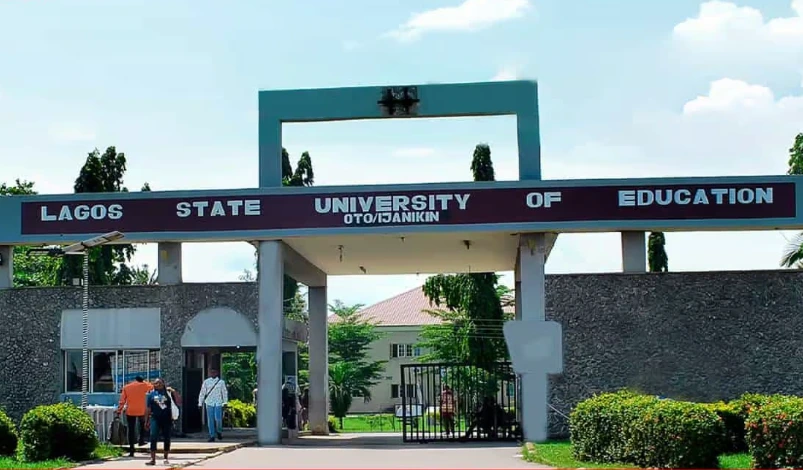
Lagos State University (LASU) was established in 1983 by the Lagos State Government and is located in Ojo, Lagos State. It is the flagship state university of Lagos — Nigeria’s commercial capital and most populous state — and serves over 30,000 students across its undergraduate and postgraduate programmes. LASU is fully accredited by the National Universities Commission (NUC) and offers 71 undergraduate courses across faculties including Arts, Business and Management Sciences, Communication and Media Studies, Education, Engineering, Environmental Sciences, Law, Management Sciences, Science, and Social Sciences.
LASU has undergone significant improvement in recent years under consistent state government investment, and its graduates are well-regarded by Lagos-based employers across banking, media, law, engineering, and the civil service.
LASU JAMB Cut-Off Mark 2026
The minimum JAMB UTME score required to apply for LASU admission is 190. Candidates who score below 190 are automatically disqualified from LASU consideration, regardless of their O’Level results or other credentials. However, in practice, competitive programmes at LASU require significantly higher JAMB scores:
- Law: 250+ strongly recommended; extremely competitive with limited spots
- Medicine (where offered): 280+
- Engineering courses: 220–260 recommended
- Computer Science: 220–250 recommended
- Management Sciences (Accounting, Finance, Business Admin): 200–230
- Arts, Social Sciences, Education: 190–210 may be sufficient depending on demand
LASU O’Level Requirements 2026
All candidates must present a minimum of 5 O’Level credit passes in relevant subjects including English Language and Mathematics in not more than two sittings. WAEC, NECO, NABTEB, and GCE O’Level results are all accepted. Specific subject requirements by faculty:
- Engineering faculties: Physics, Mathematics, Chemistry, English Language + one other science
- Law: English Language, Mathematics + three other relevant subjects
- Sciences: Relevant science subjects depending on course + English and Mathematics
- Arts/Social Sciences: English Language + four relevant subjects (Mathematics required for Economics and related courses)
- Management Sciences: English Language, Mathematics + three commercial/social science subjects
LASU School Fees 2026: Indigenes and Non-Indigenes
One of LASU’s most important features for prospective students is its relatively affordable fee structure compared to private universities. Here is the current fee breakdown for the 2025/2026 academic session:
Tuition Fees
- Stream 1 (Full-Time Regular): ₦90,040 per session for both indigenes and non-indigenes
- Stream 2 (Part-Time/Weekend): ₦180,040 per session
Other Compulsory Fees
- Acceptance Fee: ₦30,000 (one-time payment on accepting admission offer)
- Medical Fee: ₦20,000 per session
- Hostel (New Block — Male and Female): ₦350,000 per session
- Hostel (Old Block — Female Only): ₦150,000 per session
Compared to private universities in Lagos (where tuition alone can run ₦600,000–₦2,000,000 per session), LASU’s fee structure is genuinely accessible. Total annual costs for a non-hostel student at LASU typically range from ₦110,000–₦140,000, making it one of the most affordable quality university options in Southwest Nigeria.
For a full comparison of university fees across Nigeria, see our guide on Nigeria university tuition fees 2026: federal, state, and private universities compared.
LASU Post-UTME Screening 2026
LASU conducts a Post-UTME screening exercise for all shortlisted candidates who meet the minimum JAMB threshold. Key details:
- Post-UTME registration and screening announcement is made through the LASU official website and social media pages
- The examination tests candidates in subject areas relevant to their course of study
- Aggregate score formula: (JAMB ÷ 8) + (Post-UTME ÷ 2) — maximum aggregate of 100
- Candidates must present their JAMB result slip, O’Level result(s), and a valid means of identification during screening
- The Post-UTME screening fee is charged separately — monitor the LASU website for the 2026 amount
LASU gives strong preference to Lagos State indigenes for most programmes — non-indigenes compete in a separate pool for a smaller proportion of available spaces. Lagos indigenes have a meaningful advantage even with similar aggregate scores, so declaring your state correctly in your JAMB and LASU application is important.
LASU Courses and Faculties
LASU offers 71 approved undergraduate courses across its faculties. Key programmes include:
- Faculty of Law: Law (LL.B.) — one of the most competitive at LASU
- Faculty of Engineering: Civil, Electrical, Mechanical, Chemical, and Computer Engineering
- Faculty of Science: Computer Science, Mathematics, Physics, Chemistry, Biochemistry, Microbiology, Biology
- Faculty of Management Sciences: Accounting, Banking and Finance, Business Administration, Marketing, Public Administration
- Faculty of Arts: English, History, Linguistics, Philosophy, Religious Studies
- Faculty of Social Sciences: Economics, Political Science, Sociology, Psychology, Mass Communication
- Faculty of Education: Various subject-method combinations for teacher training
- Faculty of Environmental Sciences: Architecture, Urban and Regional Planning, Estate Management, Building
LASU Postgraduate Programmes 2026
LASU offers a comprehensive range of full-time and part-time postgraduate programmes including PGD, M.Sc., MBA, LL.M., M.Ed., and Ph.D. degrees. The 2025/2026 postgraduate admission exercise is currently active, with applications through the LASU Postgraduate School portal. Requirements typically include:
- A minimum of Second Class Lower (2:2) bachelor’s degree from an NUC-accredited university for most master’s programmes
- NYSC discharge or exemption certificate
- All original undergraduate academic transcripts and certificates
- Two academic references
- Programme-specific requirements (e.g., professional certifications for MBA)
Frequently Asked Questions About LASU Admission 2026
Q: Can non-Lagos indigenes gain admission to LASU?
Yes. LASU admits non-indigenes from all states of Nigeria, but a larger proportion of admission spaces is reserved for Lagos State indigenes. Non-indigenes typically need higher aggregate scores to be competitive for the same programmes. If you are not from Lagos State, ensure your JAMB score is as high as possible to remain competitive against the non-indigene cohort.
Q: Is LASU’s ₦90,040 tuition fee the same for all courses?
The ₦90,040 Stream 1 tuition fee applies to most undergraduate programmes. Some professional courses (Medicine, Law, Engineering) may have additional laboratory, studio, or clinical fees. Always request a complete fee breakdown from the LASU Bursary when making payment plans, as total fees may differ slightly by faculty.
Q: Does LASU offer scholarships for students?
LASU students may be eligible for the Lagos State Scholarship Board scholarships available to Lagos State indigenes studying at any NUC-accredited institution. Top-performing students may also access merit-based bursaries. External scholarships from organisations like MTN Foundation, Shell, and others are also open to LASU students — search for eligibility criteria and deadlines on each organisation’s official website.
Make LASU Your Next Academic Home
Lagos State University offers affordable, accredited, and career-relevant university education in the heart of Nigeria’s most dynamic city. With 71 courses across diverse faculties, reasonable school fees, and a growing reputation for academic quality, LASU is an excellent choice for both Lagos indigenes and non-indigene candidates who want quality education at a state university. Ensure your JAMB score meets the 190 threshold, prepare thoroughly for the Post-UTME screening, and submit your O’Level results correctly to give yourself the best possible chance of admission.
To see how other top universities in Nigeria compare to LASU, visit our guide on the top 10 best universities in Nigeria 2026 and our comprehensive JAMB 2026 cut-off marks guide for all universities and courses.
LASU Student Life: What to Expect on Campus
Beyond academics, LASU offers a rich campus life experience in the heart of Lagos. The university’s Ojo campus spans a substantial land area and includes academic buildings, student hostels, sporting facilities, a health centre, and a variety of dining options. Student union government (SUG) elections at LASU are among the most competitive and organised of any Nigerian state university, reflecting the university’s culture of active student civic participation. Sports are a significant part of LASU campus life — the university fields teams in football, athletics, basketball, and swimming, and participates in the Nigerian University Games Association (NUGA) competitions. Cultural and artistic societies, law clinics, entrepreneurship clubs, and professional student associations are active across all faculties, providing students with opportunities for personal development, networking, and career building far beyond the classroom. The LASU environs in Ojo, Lagos, also offer students access to the broader Lagos commercial ecosystem — many LASU students undertake internships, part-time work, and entrepreneurial ventures during their studies, leveraging the university’s location in Nigeria’s economic capital. Lagos’s extensive transportation network (BRT, ride-hailing services, and commuter buses) makes it relatively straightforward to navigate between campus and the wider city, giving LASU students access to opportunities and experiences that students at more geographically isolated campuses do not enjoy. For incoming students, orienting yourself to Lagos’s transport routes and cost-of-living dynamics in your first semester will dramatically improve the quality of your LASU experience.